Shipping Guide
IATA DGR 67th edition · US DOT 49 CFR
Battery Shipping
Since 1 January 2026, air carriers enforce a 30% state-of-charge limit across standalone, packed-with-equipment and vehicle lithium-ion shipments. Here are the rules a shipper must meet before the crate leaves.
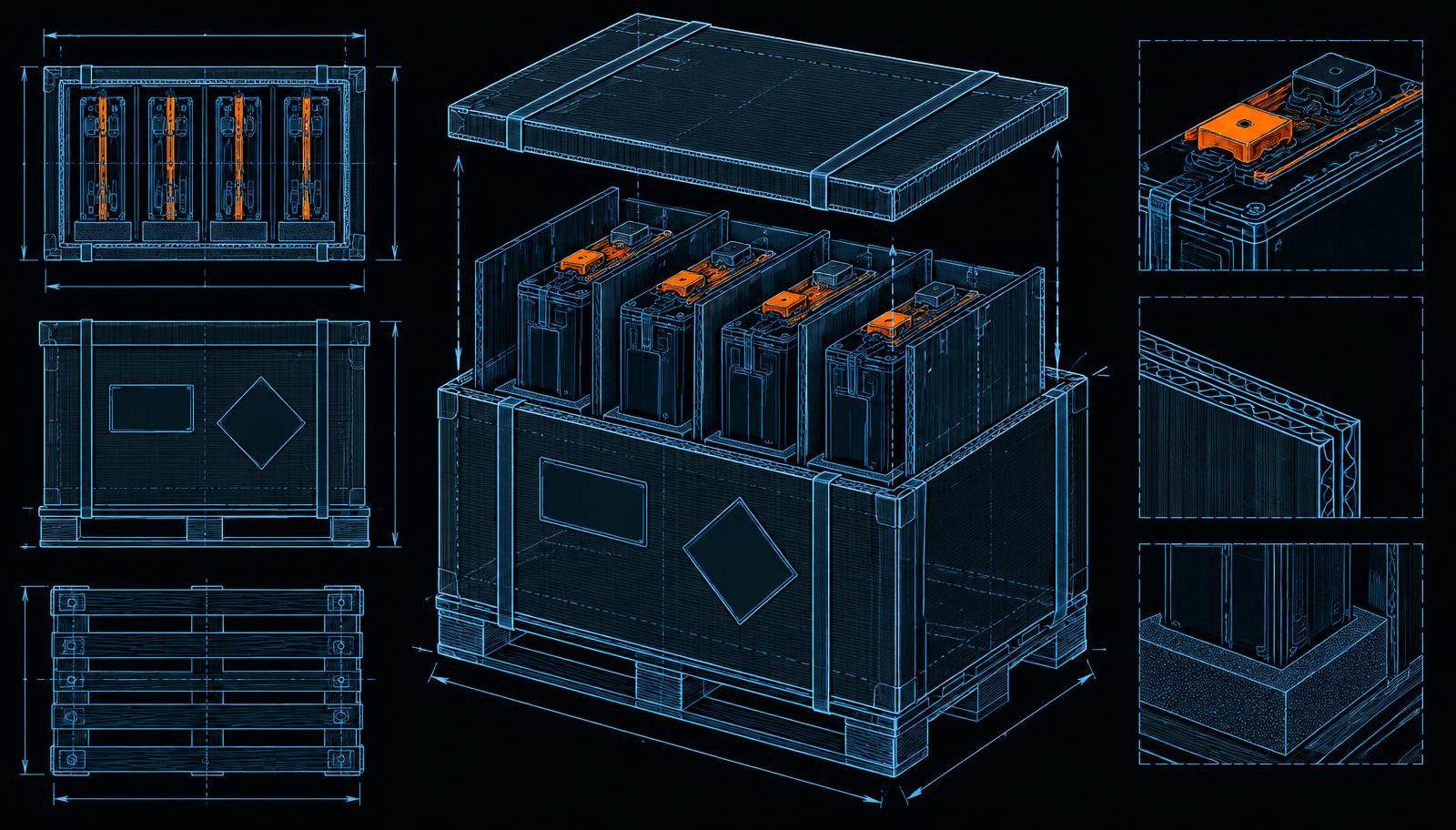
Air · 2026
Charge Limits
Guardrails
Hard Rules
Forbidden on passenger and cargo aircraft. Ground shipment needs the specific packaging in that section.
The cell and battery design must have passed UN 38.3 testing; the test summary must be available to the supply chain.
The person offering the shipment signs that it is properly classed, packaged, marked and labelled.
Check
Your Shipment
Summary of the published rules. The carrier and the current IATA DGR edition have the final word; shippers need hazmat training under 49 CFR 172.704.
HHN
Where Passport Fits
An approved shop seals the crate with its bench readings — state of charge, voltage spread and resistance per module. The Transit Passport flags any module above 30% before sealing, prints a 4×6 label with a QR code, and records each handler's scan in an unchangeable chain. It is supporting evidence; it does not replace the shipper's own certification.